Candidate John Zastoupil
University of Tennessee-Knoxville
Director of Bands
Biographical Statement
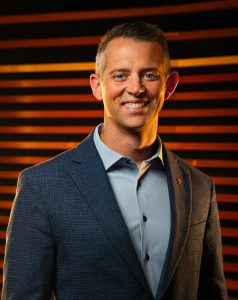
Dr. John Zastoupil is Director of Bands and tenured associate professor of music at the University of Tennessee-Knoxville. His primary responsibilities at UT include conducting the University of Tennessee Wind Ensemble, teaching graduate courses in wind studies, guiding the graduate wind conducting program, and providing the administrative leadership for all aspects of the University of Tennessee’s comprehensive and historic band program. He also serves as Chair of the Performance and Ensemble Division within the Natalie L. Haslam College of Music and is the music director/conductor of the premier adult concert band in East Tennessee, the Tennessee Wind Symphony.
A frequent contributor to the work of the College Band Directors National Association, Zastoupil has led ensembles in multiple invited CBDNA performances, including the 2025 CBDNA National Conference in Fort Worth, Texas and the 2024 CBDNA Southern Division Convention in Memphis, Tennessee with the University of Tennessee Wind Ensemble. He also led the Missouri State University Wind Ensemble at the 2018 and 2022 CBDNA Southwestern Division Conventions in Waco and Houston, TX. Since his arrival, the UTK Wind Ensemble has also performed at the East Tennessee Band and Orchestra Director’s Association Conference (Gatlinburg, TN), founded the UT Conducting Workshop, the Volunteer Concert Clinic festival high and middle school concert bands, and the UT Alumni Concert Band. He was a winner of the 2023 Warsaw Wind Band Conducting Competition held in Poland and regularly provides clinics, professional development, masterclasses, and guest conducts professional and student honor ensembles throughout the United States, including Europe and Asia.
Dr. Zastoupil previously served as Director of Concert Bands and tenured associate professor of music at Missouri State University where he guided all aspects of a comprehensive concert band program of five concert ensembles. He conducted the Missouri State Wind Ensemble, Wind Symphony, Springfield Youth Wind Ensemble, Community Band, and taught the graduate wind conducting studio. While at MSU, he served as Collegiate VP for the MMEA Board, founded the MSU Conducting Workshop, the Springfield Youth Wind Ensemble, and the Palen Concert Clinic for concert bands. The MSU Wind Ensemble also performed at the 2018 MMEA Conference, as well as performances at the Kauffman Center for the Performing Arts in Kansas City, MO and the Meyerson Symphony Center in Dallas, TX. The University Wind Symphony performed for the 2020 MMEA Conference and the Community Band performed at the MBA Summer Convention in 2021.
Dr. Zastoupil’s professional experience also includes Associate Director of Bands/Director of Athletic Bands at the University of Texas – Arlington and Eastern Michigan University. Originally from Texas, he holds degrees from Northwestern University; the University of Michigan; Baylor University; and is a former student of the Aspen Music Festival and School.
Vision for the Future of CBDNA
I envision the Southern Division of CBDNA with a vibrant, collaborative future for the wind band profession—one defined by artistic excellence, innovative teaching, meaningful scholarship, and transformative leadership inspiring musicians, educators, and audiences across generations.
CBDNA strives to be the leading voice and collaborative professional community for collegiate band directors and wind conductors by advancing wind music, cultivating emerging leaders, encouraging creativity through new works and interdisciplinary collaboration, and expanding equitable access to musical opportunity for all.
Grounded in a philosophy of servant leadership, CBDNA affirms a commitment to contribution is also a commitment to responsibility—listening first, acting with humility, and placing the growth of colleagues, students, our programs and communities at the center of our purpose.
CBDNA also envisions a collegiate band landscape where the full scope is championed and strengthened—where band programs are supported as essential expressions of musical excellence, student development, and institutional tradition, while honoring the distinct artistry, pedagogy, traditions, and service each demands.And because progress is measured not only by ideas but by outcomes, I would prioritize execution as strongly as we value innovation—turning shared aspirations into sustained action through performance, mentorship, research, advocacy, and service that deepens the cultural and educational impact of bands and strengthens a community rooted in integrity, curiosity, collegiality, and lifelong learning.