Candidate Courtney Snyder
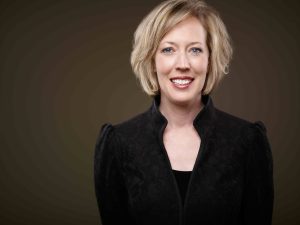
University of Michigan
Associate Director of Bands
Biographical Statement
My work as a conductor, educator, and scholar has been shaped in meaningful ways by my ongoing involvement with the College Band Directors National Association. Through that work, I’ve tried to contribute to the field not just artistically, but also in terms of teaching, research, and conversations around equity, access, and professional growth.
I’ve been involved with CBDNA conferences in a range of roles—presenter, panelist, performer, and adjudicator—which has given me multiple ways to stay engaged with colleagues across the profession. I’ve presented primarily at the national level on topics like gender equity in programming and injury prevention for conductors. Most recently, I served as a panelist at the 2025 National Conference in Fort Worth for “Can We Talk?: Gender & Power Disparities in the Field.” I’ve also presented at the 2017 National Conference in Kansas City and the 2013 National Conference in Greensboro. At the divisional level, I presented at the 2018 North Central Division Conference in Kalamazoo on support systems for women band directors and composers, and I presented twice at the 2012 National Athletic and Marching Band Symposium in Columbus.
Performance has been another important part of my CBDNA involvement. I conducted the University of Michigan Concert Band at the 2018 North Central Division Conference in Kalamazoo and earlier appeared as a guest conductor at the 2012 North Central Division Conference in Mt. Pleasant with the Central Michigan University Symphonic Band as part of the “Chosen Gems” concert. In 2026, I co-hosted the North Central Division Conference in Ann Arbor, which gave me the opportunity to help plan and carry out a large-scale professional event. I’ve also served as an adjudicator, reviewing blind recorded submissions for ensemble selection for the 2021 national conference.
My service within CBDNA has focused on research, inclusion, and mentorship. I currently serve as Chair of the CBDNA Research Committee (2025–present), working with colleagues to support the organization’s scholarly efforts, including the CBDNA Report, the National Conference Peer Review Committee, the Dissertation Database, and the CBDNA Journal Archival Database, along with service on the CBDNA Journal Editorial Committee. From 2019 to 2025, I served on the Diversity Committee, including a term as Chair of the DMA Mentorship Committee (2024–2025), where I worked to support doctoral students and build stronger professional connections. Across all these roles, my goal has been to contribute to a profession that is more inclusive, thoughtful, and grounded in research.
Vision for the Future of CBDNA
Looking ahead, I see CBDNA continuing to play a vital role in shaping not only the future of the wind band field, but also its relevance within a rapidly changing musical and cultural landscape. Central to that future is a deeper and more intentional commitment to research—not only the creation of new scholarship, but also the rediscovery and elevation of existing works that remain underrepresented or unknown. By bringing these pieces to light, we expand the repertoire in meaningful ways and challenge the boundaries of what we program, study, and value.
Conducting pedagogy must also remain a priority. As an organization, we have an opportunity to more fully recognize the importance of teaching artistry—not just technique, but the craft of shaping musical experiences. This includes creating more opportunities for students to work directly with exceptional artists and bringing distinguished conductors into intercollegiate settings where they can model the highest levels of musical leadership and collaboration. Just as importantly, these experiences should go beyond simply playing in an ensemble under a guest conductor. Students should have structured opportunities to engage with these artists—asking questions, observing and discussing rehearsal decisions, and gaining insight into the musical and pedagogical choices that shape the work. In doing so, they can take away practical and meaningful knowledge that will inform their own development as future music educators.
CBDNA is also uniquely positioned to help broaden the reach of band music while shaping how it is experienced by both performers and audiences. Our ensembles and institutions can serve as points of connection—using repertoire not only as a vehicle for performance, but as a way to build community, foster dialogue, and reflect a wide range of experiences. This includes thinking more creatively about programming: moving beyond collections of contrasting works toward programs with a clear through line, where each piece contributes to a larger arc or narrative. In this model, programming becomes a way of telling a story, offering students a more cohesive artistic experience and providing audiences with something more intentional and meaningful.
At the same time, this approach connects directly to how we prepare future music educators. Students should be encouraged to think expansively about their role as curators, teachers, and artists—ready to engage a profession that is increasingly diverse, interdisciplinary, and evolving. That preparation also includes engaging more deeply with the music of our time. By investing in composers who are writing substantive, lasting works today—while also revisiting ideas from the past that were ahead of their time—we ensure that the repertoire remains both relevant and enduring.
Improvisation should be a central part of this vision. Continuing the work related to the Third Stream, we can more intentionally explore the space between traditions, integrating improvisation into ensemble settings in ways that feel natural and accessible. Initiatives like my commissioning series, Emergence: Works for Concert Band with Improvisation, are one way to support this work—creating repertoire that invites all students, regardless of background, to develop improvisational skills within the context of the wind band. In doing so, we not only expand students’ technical abilities, but also foster creativity, flexibility, and a more personal connection to music-making.
Finally, the unique versatility of the wind ensemble offers exciting possibilities for the future. Because of the wide range of ensemble sizes within our field, we are well positioned to commission and perform works that bridge the gap between chamber and large ensemble settings. This flexibility allows for innovation in programming, collaboration, and performance formats, ultimately expanding what band music can be and who it can reach.
In all of this, CBDNA’s role is not just to support the field as it exists, but to actively help shape what it can become—thoughtful, inclusive, forward-looking, and deeply connected to the world around it.