Candidate Onsby Rose
Dordt University
Director of Bands
Biographical Statement
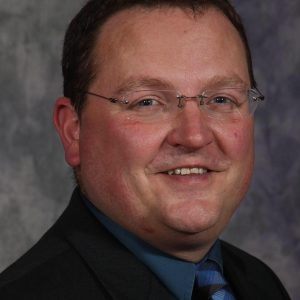
Dr. Onsby C. Rose serves as Director of Instrumental Activities and Professor of Music at Dordt University in Sioux Center, Iowa, where he conducts the Wind Symphony, Symphonic Band, Defender Athletic Band, and 4th Ave. Jazz Ensemble. In addition, he oversees all seven of the Dordt Instrumental Ensembles, 24 applied adjunct professors, as well as the Instrumental Music Education Program. He also serves as Principal Conductor of the Northwest Iowa Symphony Orchestra. During his seven-year tenure at Dordt University the instrumental area has seen record growth, nearly doubling in size. His work as a conductor, composer, and educator is grounded in the conviction that small university wind programs can produce artistry of the highest caliber while serving as engines of regional musical culture.
Dr. Rose has been an active contributor to CBDNA across both the regional and national levels. In February 2018, he participated in the Chosen Gems concert at the CBDNA North Central Division Conference, hosted at Western Michigan University — a program dedicated to surfacing overlooked and under-programmed works from the wind band repertoire. In March 2025, the Dordt Wind Symphony was selected for the Small College Showcase at the CBDNA National Conference, hosted at Texas Christian University — a recognition that reflects the artistic standard and programming vision he has cultivated within his program. The following spring, in April 2026, Dr. Rose returned to the conference stage with a presentation titled “Transforming Small College Band Programs through Recruitment, Skill-Building, and Strategic Collaboration” at the CBDNA North Central Division Conference, hosted at the University of Michigan, sharing practical frameworks drawn from his work at Dordt. In addition, Dr. Rose has attended all National and Divisional Conferences since joining the organization in 2017. Dr. Rose has also presented at state an international conferences highlighting wind repertoire, rehearsal and conducting pedagogy, and overall artistry of the modern wind band.
As a composer published through Murphy Music Press, Dr. Rose has contributed 29 works to the wind band catalog, with commissions including his Symphony No. 2, “The Sacred Cloth,” for “The President’s Own” U.S. Marine Band, Symphony No. 3, “Annapolis,” commissioned by the U.S. Naval Academy Band for a 2027 world premiere, as well as numerous other ongoing commissions for full wind band and chamber ensembles. His compositional voice was shaped through studies with the late Dr. David Maslanka, and his conducting pedagogy was forged under Dr. John Stanley Ross and Dr. Russel C. Mikkelson during his graduate studies at Appalachian State University and The Ohio State University.
Before entering higher education, Dr. Rose served eleven years as a United States Marine Corps musician, including a tenure with “The Commandant’s Own” U.S. Marine Drum and Bugle Corps as well as a trombonist and conductor with Marine Bands in Albany, GA and New Orleans, LA. In addition, he was a faculty member at the Armed Forces School of Music. He also taught middle and high school bandfor a number of years in upper east Tennessee. These formative experiences — performing at the highest professional standards in service to country and community — continue to shape his approach to ensemble craft, rehearsal discipline, and the mentorship of emerging wind band musicians. He brings the same ethos of service to his work in the Upper Midwest, where he is currently building the Great Plains Youth Wind Symphony, a new regional auditioned youth ensemble serving high school musicians across Iowa, Minnesota, South Dakota, and Nebraska, with inaugural rehearsals beginning in January 2027.
Across recruitment, repertoire, composition, and ensemble building, Dr. Rose’s work reflects a sustained investment in the same questions CBDNA exists to address: how small and mid-sized college programs can thrive artistically and exist as highly effective contributors to the overall music education profession, as well as the artistry of the modern wind band. As well as how wind band repertoire continues to grow and evolve, and how the profession sustains itself through the development of younger players. He is eager to contribute that perspective and energy to CBDNA’s ongoing service to the wind band field through service at the division and/or national level.
Vision for the Future of CBDNA
I joined this profession because of the people in it. The conductors who took time with me when I had nothing to offer in return. The composers who answered emails from a young Marine musician with no résumé. The mentors — John Ross, Russel Mikkelson, David Maslanka — who treated the wind band as a serious art form worth a serious life. CBDNA is the organization that holds that community together, and any vision for its future has to begin with gratitude for the people who have carried it this far.
Or recent years have shown what this organization is capable of when we move with intention. We have seen national and divisional conference programming open in real ways, with composers and conductors on the podium who would not have been there a decade ago. We have seen sustained attention to commissioning new voices, mentorship pipelines for younger composers and conductors, and a growing acknowledgment that the wind band world extends well beyond the flagship programs that have historically defined our conversation. None of that happened by accident. It happened because members, committees, and elected leaders did patient, often invisible work — and that work deserves to be named before we talk about what comes next.
I see four places where I would love to help us keep building.
Repertoire as a shared inheritance, not a dividing line. Some of the most tired conversations in our field are the ones that pit the canon against new and diverse voices, as if programming Holst and programming Omar Thomas are somehow in competition. The conductors I learn the most from refuse that frame entirely — they program older works because they are excellent and newer works because they are excellent, and they teach their students to recognize the difference between a piece that has earned its place and a piece that is simply familiar. CBDNA has been steadily modeling this kind of programming literacy at the national level. I would love to see us keep pushing it down into the everyday rehearsal-room decisions that shape what our students believe the wind band actually is.
Access as an ongoing commitment. The work of widening CBDNA’s circle — to community colleges, small liberal arts schools, regional state universities, faith-based institutions — has moved in encouraging directions in recent years. We are seeing programs and people represented who would not have been visible at the national level a decade ago, and that matters enormously. I teach at Dordt University in Sioux Center, Iowa, a school most of our colleagues could not place on a map, and I can tell you that the talent, ambition, and pedagogical seriousness in places like mine is not the problem. The work in this area isn’t finished — it probably never will be — but the trajectory is right, and I would like to help sustain the momentum.
Commissioning as infrastructure we build together. As a composer published through Murphy Music Press, I see the consortium model from both sides of the podium, and I am grateful for what it has made possible. There is real, hard-won progress in how we commission, who we commission, and how those works find their way into the repertoire. The next conversation, I think, is about depth and durability — supporting mid-career composers whose pieces don’t have viral moments, building mentorship for composers outside academia, talking honestly about commissioning standards, and making sure the second and third performances of new works happen as faithfully as the premieres do. CBDNA is well-positioned to convene those conversations, and I would love to be part of them.
International engagement as a natural extension of who we already are.Our colleagues in Japan, the Netherlands, the UK, Belgium, Spain, and across Latin America are doing extraordinary work, and many CBDNA members already have rich relationships with ensembles and institutions abroad. WASBE does indispensable work in this space, and CBDNA has its own meaningful international connections to build on. I would love to see us continue deepening institutional partnerships, bringing international repertoire and pedagogy more fully into our conference conversations, and treating the global wind band community as colleagues in a shared art form rather than a separate world.
Underneath all four of these is a single conviction I hold gently but firmly: CBDNA at its best is not a gatekeeper but a gathering place. The work of our members and leaders in recent years has moved us further in that direction, and I would consider it a privilege to help carry that work forward alongside the colleagues who have done so much to bring us here.